
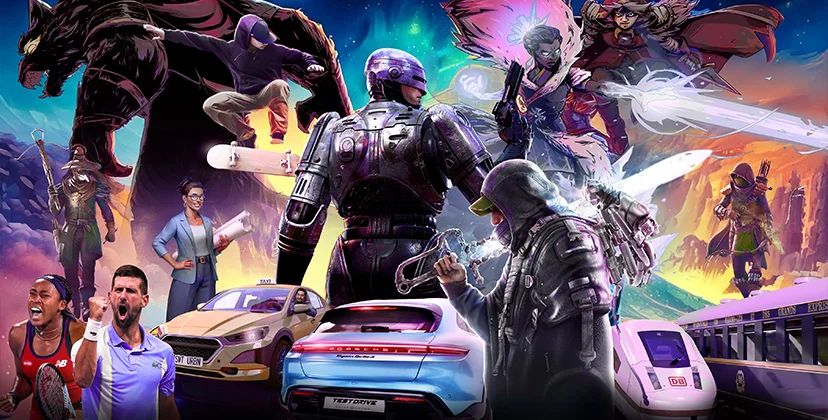
Modern games have become one of the most dynamic forms of entertainment in the world. Unlike traditional games that were often limited to physical spaces, modern games can create enormous digital environments where players can explore, compete, build, communicate, and experience interactive stories. Advances in technology have transformed gaming from a simple pastime into a global industry that combines creativity, software development, art, music, storytelling, and social interaction.
The Evolution of Modern Games
Modern gaming has developed through several major technological changes. Early electronic games had simple graphics and limited gameplay, but improvements in computer hardware allowed developers to create increasingly detailed experiences.
Today, games can feature realistic environments, complex characters, advanced sound systems, and large interactive worlds. Powerful processors and graphics technologies allow developers to simulate environments that respond to player actions in real time.
The development of the internet also changed gaming significantly. Instead of playing only against computer-controlled opponents, players can connect with people from different parts of the world. Online gaming has become a major part of modern gaming culture.
Modern Gaming Platforms
One of the defining characteristics of modern games is the variety of platforms available. Players can enjoy games on desktop computers, laptops, consoles, smartphones, and tablets.
Gaming consoles provide dedicated hardware designed for interactive entertainment, while computers offer flexibility and support for many different genres. Smartphones have made gaming particularly accessible because people can carry powerful gaming devices with them almost everywhere.
Cloud-based gaming is another developing area. It can allow players to access certain games through internet-connected devices without relying entirely on local hardware. As internet infrastructure improves, this approach may become increasingly important.
Popular Modern Game Genres
Modern games are available in an enormous variety of genres. Action games focus on movement, combat, and quick reactions. Strategy games require planning, resource management, and decision-making.
Role-playing games often combine character development, exploration, storytelling, and missions. Racing games provide competitive driving experiences, while sports games recreate activities such as football, basketball, cricket, and tennis.
Simulation games allow players to manage businesses, cities, vehicles, or other systems. Puzzle games focus on logic and problem-solving, while adventure games may emphasize exploration and narrative.
The wide selection of genres means that modern gaming can appeal to players with very different interests.
Online Multiplayer Gaming
Online multiplayer is one of the most important features of modern games. Players can cooperate with friends, compete against opponents, and communicate through voice or text systems.
Team-based games often require coordination. Players may have different responsibilities and must work together to achieve objectives. This creates a social dimension that was less common in earlier gaming experiences.
Online communities can also extend beyond individual matches. Players may participate in forums, watch live streams, exchange strategies, and follow competitive events.
Graphics and Visual Technology
Graphics have undergone enormous changes over the history of gaming. Modern games can display detailed environments, realistic lighting, advanced animations, and highly developed characters.
Improved graphics hardware allows developers to create visual experiences that can closely resemble real-world environments while still supporting completely fictional worlds.
However, graphics are not the only factor that determines whether a game is enjoyable. Strong gameplay, interesting design, good controls, and meaningful challenges remain essential.
Artificial Intelligence in Modern Games
Artificial intelligence is becoming increasingly relevant to game development. AI can help developers create computer-controlled characters that respond to player actions and behave in more complex ways.
AI can also assist with testing, development workflows, procedural content, and other technical tasks. In the future, more adaptive systems could allow game environments to react differently depending on how individual players behave.
The goal is not simply to make games more complicated but to create experiences that feel responsive and engaging.
Virtual and Augmented Reality
Virtual reality and augmented reality have introduced new possibilities for modern gaming. Virtual reality can place players inside a simulated environment using specialized equipment.
Augmented reality takes a different approach by combining digital elements with the real world. These technologies can change how players interact with games and may create experiences that feel more physical and immersive.
As hardware becomes more comfortable and accessible, these technologies could become increasingly important within the gaming industry.
Social and Competitive Gaming
Modern games have become closely connected with social media, streaming, and online communities. Players can share gameplay, discuss strategies, create content, and build audiences around their favorite games.
Competitive gaming has also grown into a major entertainment category. Esports tournaments bring skilled players and teams together in organized competitions. Professional gaming has created opportunities for players, coaches, commentators, event organizers, and content creators.
This broader ecosystem demonstrates how modern games can become more than individual entertainment products.
Mobile Modern Games
Mobile gaming has expanded the audience for modern games dramatically. Smartphones provide convenient access to thousands of games, ranging from simple puzzles to complex multiplayer experiences.
Mobile games are often designed around flexible play sessions. A player may spend a few minutes completing a challenge or several hours participating in a larger experience.
The continued improvement of mobile hardware means developers can create increasingly sophisticated games for smartphones and tablets.
Modern Games and Creativity
Modern games are also powerful creative platforms. Developers combine programming, visual design, music, writing, animation, and interactive systems to produce unique experiences.
Some games give players extensive creative tools. Players can build structures, design environments, customize characters, and create their own content. This allows gaming to become a form of digital creativity rather than simply consumption.
Independent developers have also contributed significantly to modern gaming. Smaller studios can experiment with unusual ideas and reach audiences through digital distribution.
Responsible Gaming
Modern games can provide entertainment and social interaction, but responsible use remains important. Spending excessive amounts of time playing may interfere with sleep, education, work, exercise, or relationships.
Players can maintain a healthier routine by taking regular breaks and balancing gaming with other activities. Gaming can be enjoyable when it remains one part of a balanced lifestyle.
Parents and guardians may also help younger players by discussing online safety, privacy, appropriate content, and healthy screen-time habits.
The Future of Modern Games
The future of modern gaming will likely be shaped by continued advances in technology. Artificial intelligence, cloud services, virtual reality, augmented reality, improved graphics, and faster connectivity may create new forms of interactive entertainment.
Games may become increasingly personalized, with environments and characters responding to individual player behavior. Cross-platform technology may also make it easier for people using different devices to play together.
Despite these developments, successful games will still depend on creativity and good design. Technology can provide new tools, but developers need strong concepts, engaging gameplay, and meaningful experiences to use those tools effectively.
Conclusion
Modern games represent the combination of entertainment, technology, creativity, and social interaction. They have evolved far beyond simple digital challenges and now offer detailed worlds, competitive experiences, creative systems, and opportunities for global communication.
With new technologies continuing to develop, modern games are likely to become even more interactive and accessible. Whether played casually on a smartphone, competitively online, or through immersive virtual reality, games will continue to influence entertainment and digital culture for years to come.